<?xml version="1.0" encoding="UTF-8"?>
<feed xmlns="http://www.w3.org/2005/Atom">
  <title type="text">Tour of Maida Vale</title>
  <updated>2026-11-22T20:00:51+00:00</updated>
  <generator uri="http://framework.zend.com" version="1.12.20">Zend_Feed_Writer</generator>
  <link rel="alternate" type="text/html" href="https://www.maidavale.dh.msu.domains/"/>
  <link rel="self" type="application/atom+xml" href="https://www.maidavale.dh.msu.domains/items/browse?output=rss2"/>
  <id>https://www.maidavale.dh.msu.domains/</id>
  <author>
    <name>Tour of Maida Vale</name>
    <uri>https://www.maidavale.dh.msu.domains</uri>
  </author>
  <link rel="hub" href="http://pubsubhubbub.appspot.com/"/>
  <entry>
    <title type="html"><![CDATA[ Abbey Road Studios&#039; Impact on the Economy of Maida Vale]]></title>
    <summary type="html"><![CDATA[<img src="https://www.maidavale.dh.msu.domains/files/fullsize/6d8b999933cd936297ea68cc8753e368.jpg" alt="[Untitled]" /><br/><p>Abbey Road Studios was built on November 12, 1931, and has influenced the economy by providing jobs in the area, driving technological advancements in the music industry, and attracting tourism due to its ties with The Beatles. Some of the technological advancements that Abbey Road Studios brought to music were stereo recording, Artificial Double Tracking (ADT), and modern software emulations. The main jobs that the studios brought to the area were audio engineers, technicians, and studio staff. Along with The Beatles, this studio is also where the soundtracks to movies such as the lord of the Rings and Star Wars were created, which created a large amount of revenue. The photo provided shows the building plans, where you can see how large a building this actually is. Additionally, if you check out the link sourcing the image, you will find details such as the fact that, similar to BBC Maida Vale, this building is a Grade II building.</p><p><em><strong><a href="https://www.maidavale.dh.msu.domains/items/show/27">For more view the original article</a></strong></em></p>]]></summary>
    <published>2026-05-30T14:53:27+00:00</published>
    <updated>2026-06-03T13:27:42+00:00</updated>
    <link rel="alternate" type="text/html" href="https://www.maidavale.dh.msu.domains/items/show/27"/>
    <id>https://www.maidavale.dh.msu.domains/items/show/27</id>
    <author>
      <name>Cameron</name>
    </author>
  </entry>
  <entry>
    <title type="html"><![CDATA[Abbey Road Studios]]></title>
    <summary type="html"><![CDATA[<img src="https://www.maidavale.dh.msu.domains/files/fullsize/7bb4a9866e5d8a4d55871e125dc77962.jpg" alt="[Untitled]" /><br/><p><a href="https://www.youtube.com/watch?v=EYE-mhJOm5g"></a>When most people think of Abbey Road Studios, their first thought isn't about movies. However, many of the best known soundtracks have been recorded here. John Williams is one of the most well known film composers of modern movies and frequently chooses to record at Abbey Road Studios. Watch this video to see how the music Star Wars: Episode 1-The Pantom Menace was recorded, mixed and edited. </p><p><a href="https://www.youtube.com/watch?v=EYE-mhJOm5g">https://www.youtube.com/watch?v=EYE-mhJOm5g</a></p><p>Williams also write the music for The Lord of the Rings, Harry Potter, Raiders of the Lost Ark (Indiana Jones) and other Star Wars music and had it recorded and mixed at Abbey Road.</p><p><em><strong><a href="https://www.maidavale.dh.msu.domains/items/show/3">For more view the original article</a></strong></em></p>]]></summary>
    <published>2026-05-29T09:56:51+00:00</published>
    <updated>2026-06-03T14:02:20+00:00</updated>
    <link rel="alternate" type="text/html" href="https://www.maidavale.dh.msu.domains/items/show/3"/>
    <id>https://www.maidavale.dh.msu.domains/items/show/3</id>
    <author>
      <name>Allison H</name>
    </author>
  </entry>
  <entry>
    <title type="html"><![CDATA[Abbey Road Studios]]></title>
    <summary type="html"><![CDATA[<img src="https://www.maidavale.dh.msu.domains/files/fullsize/192d49e686c1e239ffef91716cd83318.jpg" alt="[Untitled]" /><br/><p>Abbey Road Studios is the hub for some of the most iconic groups and figures in the world; including, Adele, Pink Floyd, Radiohead, and most famously, The Beatles. The Beatles recorded with Abbey Road Studios religiously, recording 190 of 210 of their songs. They continue to hold the record for most recorded songs ever recorded at Abbey Road Studios. After naming their 1969 album after it, the studio rose to fame and is now loved by music lovers from all over the world. The home was purchased by Gramophone studios for only £16,000 in 1929 and opened two years later on November 12th. The former 9 bed townhouse built in 1831 ended up becoming the world's first purpose-built recording studio.</p><p><em><strong><a href="https://www.maidavale.dh.msu.domains/items/show/5">For more (including 1 audio file) view the original article</a></strong></em></p>]]></summary>
    <published>2026-05-29T09:58:18+00:00</published>
    <updated>2026-07-07T20:23:11+00:00</updated>
    <link rel="alternate" type="text/html" href="https://www.maidavale.dh.msu.domains/items/show/5"/>
    <id>https://www.maidavale.dh.msu.domains/items/show/5</id>
    <author>
      <name>Alanna Bromm</name>
    </author>
  </entry>
  <entry>
    <title type="html"><![CDATA[BBC Recording Studios&#039; Effect on Maida Vale Economy: BBC Recording Studios]]></title>
    <summary type="html"><![CDATA[<img src="https://www.maidavale.dh.msu.domains/files/fullsize/8074fad41fb7d182fccaeb8afcf35ecf.jpg" alt="[Untitled]" /><br/><p>Previously a roller skating rink, this building was turned into the BBC recording studios in the 1930s. While the studio didn't have a massive direct impact on the economy, it had a good amount of secondary effects, such as attracting tourists and giving the area an identity. Bringing in tourists allows the surrounding businesses to gain more traction and thus more revenue. As of recently, the BBC has sold this building to Hans Zimmer, his business partner Steven Kofsky, and film producers Tim Bevan and Eric Fellner, which means that this building will likely remain a point of interest in Maida Vale. Relating to the sale as well as renovations, I've included the digitized building plans showing both the size of the building and the fact that the building is a grade II building, meaning that when selling it will go for a higher price than others.</p><p><em><strong><a href="https://www.maidavale.dh.msu.domains/items/show/26">For more view the original article</a></strong></em></p>]]></summary>
    <published>2026-05-30T14:52:56+00:00</published>
    <updated>2026-06-03T13:24:40+00:00</updated>
    <link rel="alternate" type="text/html" href="https://www.maidavale.dh.msu.domains/items/show/26"/>
    <id>https://www.maidavale.dh.msu.domains/items/show/26</id>
    <author>
      <name>Cameron</name>
    </author>
  </entry>
  <entry>
    <title type="html"><![CDATA[BBC Studios]]></title>
    <summary type="html"><![CDATA[<img src="https://www.maidavale.dh.msu.domains/files/fullsize/e7c675fe698e62e89a5f5223ad4c425c.jpg" alt="[Untitled]" /><br/><p><span>The BBC moved into Maida Vale Studio in 1933 because their existing studios no longer had the recording capabilities they needed. In 1934 the BBC Symphony Orchestra moved into one of the seven studios. For nearly 90 years, the BBC Symphony Orchestra rehearsed, broadcasted, and recorded their works. The BBC SO is best well known for their Proms, an eight week long concert series during the summer. As one of the premire symphony orchestras worldwide, they have been able to work with many composers to premire orchestral works. One of the best well known premires was Gustav Holst's <em>The Planets</em>. A close friend of Holst, Adrian Boult was the conductor of the BBC SO for 20 years and was the one able to connect the orchestra to this composer. </span></p><p><span>Click here to read through a history of the building</span></p><p><a href="https://cdn.knightlab.com/libs/timeline3/latest/embed/index.html?source=v2%3A2PACX-1vRoSyuL6Q7D4oQBA6cVdLjrhjAkqkm_kXhqopUBdcU1yAyRnojvUM4demXCOaE1kXVQ0-0Y47N-VNmn&font=Default&lang=en&initial_zoom=2&width=100%25&height=650"></a> <iframe width="100%" height="650" src="https://cdn.knightlab.com/libs/timeline3/latest/embed/index.html?source=v2%3A2PACX-1vRoSyuL6Q7D4oQBA6cVdLjrhjAkqkm_kXhqopUBdcU1yAyRnojvUM4demXCOaE1kXVQ0-0Y47N-VNmn&font=Default&lang=en&initial_zoom=2&width=100%25&height=650" webkitallowfullscreen="webkitallowfullscreen" mozallowfullscreen="mozallowfullscreen" allowfullscreen="allowfullscreen" frameborder="0"></iframe></p><p><em><strong><a href="https://www.maidavale.dh.msu.domains/items/show/6">For more view the original article</a></strong></em></p>]]></summary>
    <published>2026-05-29T10:01:08+00:00</published>
    <updated>2026-06-03T14:45:19+00:00</updated>
    <link rel="alternate" type="text/html" href="https://www.maidavale.dh.msu.domains/items/show/6"/>
    <id>https://www.maidavale.dh.msu.domains/items/show/6</id>
    <author>
      <name>Allison H</name>
    </author>
  </entry>
  <entry>
    <title type="html"><![CDATA[Broad Walk: Avenue Gardens]]></title>
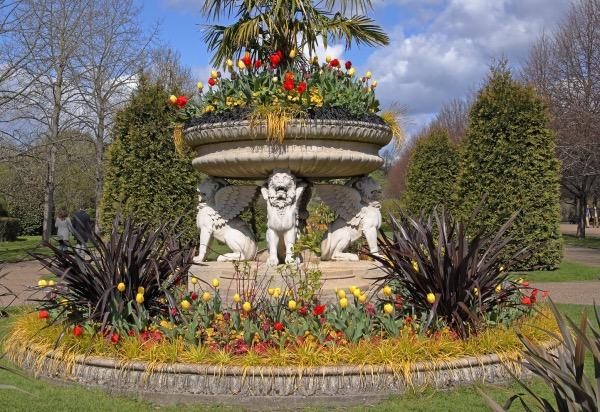
    <summary type="html"><![CDATA[<p><strong><em>Griffin Tazza</em></strong></p><img src="https://www.maidavale.dh.msu.domains/files/fullsize/77aa8b3e0e526da4bb89d3d83500f680.jpg" alt="[Untitled]" /><br/><p>Walking south down the Broad Walk, you can walk down a sudden change of atmosphere. Here you can see Italian influence in the landscaping. John Nash, the architect of the Broad Walk, initially had this plot as part of his project in 1811. The trees in this portion, however, did not thrive as well as the others. Victorian designer William Andrews Nesfield decided to take this area and finished working on the Italian Gardens in 1865. The garden itself fell into disrepair and was restored in the 1990s. Now you can find many people walking through to look at the seasonal flowers and stonework. One of the most popular stoneworks is the Griffin Tazza. This statue is an original work by Austin and Seeley, the duo that defined the use of artificial stone works in gardening. They worked with "artificial limestone" and marketed it as something that won't weather with time. This work in particular is not something that you will find in other gardens they were commissioned for, and is worth a look for yourself.</p><p><em><strong><a href="https://www.maidavale.dh.msu.domains/items/show/7">For more (including 2 images) view the original article</a></strong></em></p>]]></summary>
    <published>2026-05-29T10:07:32+00:00</published>
    <updated>2026-06-03T14:07:00+00:00</updated>
    <link rel="alternate" type="text/html" href="https://www.maidavale.dh.msu.domains/items/show/7"/>
    <id>https://www.maidavale.dh.msu.domains/items/show/7</id>
    <author>
      <name>Piper R.</name>
    </author>
  </entry>
  <entry>
    <title type="html"><![CDATA[Browning’s Pool]]></title>
    <summary type="html"><![CDATA[<img src="https://www.maidavale.dh.msu.domains/files/fullsize/e154f433128d8e1d8c1f076dbd22f752.jpg" alt="[Untitled]" /><br/><p>Walking along Regent’s Canal, you’ll come across an area called “Little Venice.” This area is filled with houseboats, vibrant cafes, and a small island in the middle of the canal called Browning’s Island. The island was named after the 19th-century poet Robert Browning, who lived in the area and is even attributed with giving the area its nickname, “Little Venice.” Browning moved to the area after the death of his wife, Elizabeth Barrett Browning, who was also a celebrated poet. Browning lived in the Maida Vale area during the 1860’s, and there he grew his reputation as a prominent literary figure in London. Explore some of his poems he wrote during his time in Maida Vale, such as <i>Rabbi Ben Ezra</i>, <i>Caliban upon Setebos</i>, and <i>Abt Vogler</i>. The island can be seen from the sidewalks along the canal; it currently serves as a bird sanctuary and has no footpath to the island. He is buried in the Poet’s Corner of Westminster Abbey, so if you find yourself near the abbey, visit the great poet’s place of rest.</p><p><em><strong><a href="https://www.maidavale.dh.msu.domains/items/show/8">For more view the original article</a></strong></em></p>]]></summary>
    <published>2026-05-29T10:07:35+00:00</published>
    <updated>2026-07-07T20:43:34+00:00</updated>
    <link rel="alternate" type="text/html" href="https://www.maidavale.dh.msu.domains/items/show/8"/>
    <id>https://www.maidavale.dh.msu.domains/items/show/8</id>
    <author>
      <name>Cora Ackerson</name>
    </author>
  </entry>
  <entry>
    <title type="html"><![CDATA[Church of Saint Saviour: Anglican Place of Worship]]></title>
    <summary type="html"><![CDATA[<img src="https://www.maidavale.dh.msu.domains/files/fullsize/bd23954e0449a5ddfb7891e7b16cf3c1.jpg" alt="[Untitled]" /><br/><p>If you’ve ever gotten off the Tube at Warwick Avenue Station, chances are you’ve noticed the strikingly modern Anglican church of St. Saviour. Originally consecrated in the 1850s, St. Saviour’s was once a classic Victorian-style church that served the growing Maida Vale community. At the time, it could seat around 1,700 people, with 500 of those seats reserved specifically for the poor. </p><p>Today, however, the church looks very different from its original Victorian design. By the 1960s, church attendance had begun to decline, and the costs of maintaining such a large building became steep. In 1972, the original church was demolished and rebuilt into the contemporary structure you see today. Apparently, many people opposed the modernization plans at the time, as the redesign was such a dramatic departure from the original building. The most striking feature of the current church is its 165-foot-tall fiberglass spire, which replaced the original tower. This building in particular raises an interesting question: Do you prefer the old version or the modern version of the church?</p><p><em><strong><a href="https://www.maidavale.dh.msu.domains/items/show/23">For more (including 2 images) view the original article</a></strong></em></p>]]></summary>
    <published>2026-05-29T10:54:53+00:00</published>
    <updated>2026-06-03T14:32:49+00:00</updated>
    <link rel="alternate" type="text/html" href="https://www.maidavale.dh.msu.domains/items/show/23"/>
    <id>https://www.maidavale.dh.msu.domains/items/show/23</id>
    <author>
      <name>Julia Bolash&amp;#32;&amp;amp;&amp;#32;Madeline Peters</name>
    </author>
  </entry>
  <entry>
    <title type="html"><![CDATA[Edward Ardizzone]]></title>
    <summary type="html"><![CDATA[[Text Unavailable]<p><em><strong><a href="https://www.maidavale.dh.msu.domains/items/show/11">For more view the original article</a></strong></em></p>]]></summary>
    <published>2026-05-29T10:11:02+00:00</published>
    <updated>2026-06-03T12:26:17+00:00</updated>
    <link rel="alternate" type="text/html" href="https://www.maidavale.dh.msu.domains/items/show/11"/>
    <id>https://www.maidavale.dh.msu.domains/items/show/11</id>
    <author>
      <name>Tour of Maida Vale</name>
    </author>
  </entry>
  <entry>
    <title type="html"><![CDATA[Edward Ardizzone: A Children&#039;s Illustrator at War]]></title>
    <summary type="html"><![CDATA[<img src="https://www.maidavale.dh.msu.domains/files/fullsize/b3d3750305870730bc2e73f739e17c72.jpg" alt="[Untitled]" /><br/><p>Edward Ardizzone is said to have been the most travelled and most beloved government-commissioned war artist of all time. He lived in this house from 1920 - 1972 and began as a professional <a href="https://www.lib.usm.edu/legacy/degrum/public_html/html/research/findaids/ardizzon.htm">artist</a> through advertising and freelance book illustration. He later wrote, illustrated, and published his own children’s series. During World War II, he served as a <a href="https://www.iwm.org.uk/history/second-world-war/home-front/how-war-artist-edward-ardizzone-showed-the-human-side-of-war">war artist</a>, and published a book on his experience travelling to France at the beginning of the war, back to England to document the Blitz, then to Egypt, Italy, and Germany amongst other nations. </p><p>His background in portraying real life in a palatable way to children gave his war depictions a charming appeal. The positive representation of Britain’s contributions to the war were then used as propaganda on the home front. His art still bore, in some cases, depictions of war’s devastation, with a gentle touch. The War Artists Advisory Committee (WAAC) received over 400 works from Ardizzone. More of Ardizzone’s works can be accessed via the <a href="https://www.edward-ardizzone-archive.org/">Edward Ardizzone Archive</a>.</p><p><em><strong><a href="https://www.maidavale.dh.msu.domains/items/show/38">For more (including 2 images) view the original article</a></strong></em></p>]]></summary>
    <published>2026-06-03T11:51:26+00:00</published>
    <updated>2026-06-03T14:35:18+00:00</updated>
    <link rel="alternate" type="text/html" href="https://www.maidavale.dh.msu.domains/items/show/38"/>
    <id>https://www.maidavale.dh.msu.domains/items/show/38</id>
    <author>
      <name>Erin Broecker</name>
    </author>
  </entry>
</feed>
