<?xml version="1.0" encoding="UTF-8"?>
<feed xmlns="http://www.w3.org/2005/Atom">
  <title type="text">Tour of Maida Vale</title>
  <updated>2026-11-22T20:00:51+00:00</updated>
  <generator uri="http://framework.zend.com" version="1.12.20">Zend_Feed_Writer</generator>
  <link rel="alternate" type="text/html" href="https://www.maidavale.dh.msu.domains/"/>
  <link rel="self" type="application/atom+xml" href="https://www.maidavale.dh.msu.domains/items/browse?output=rss2"/>
  <id>https://www.maidavale.dh.msu.domains/</id>
  <author>
    <name>Tour of Maida Vale</name>
    <uri>https://www.maidavale.dh.msu.domains</uri>
  </author>
  <link rel="hub" href="http://pubsubhubbub.appspot.com/"/>
  <entry>
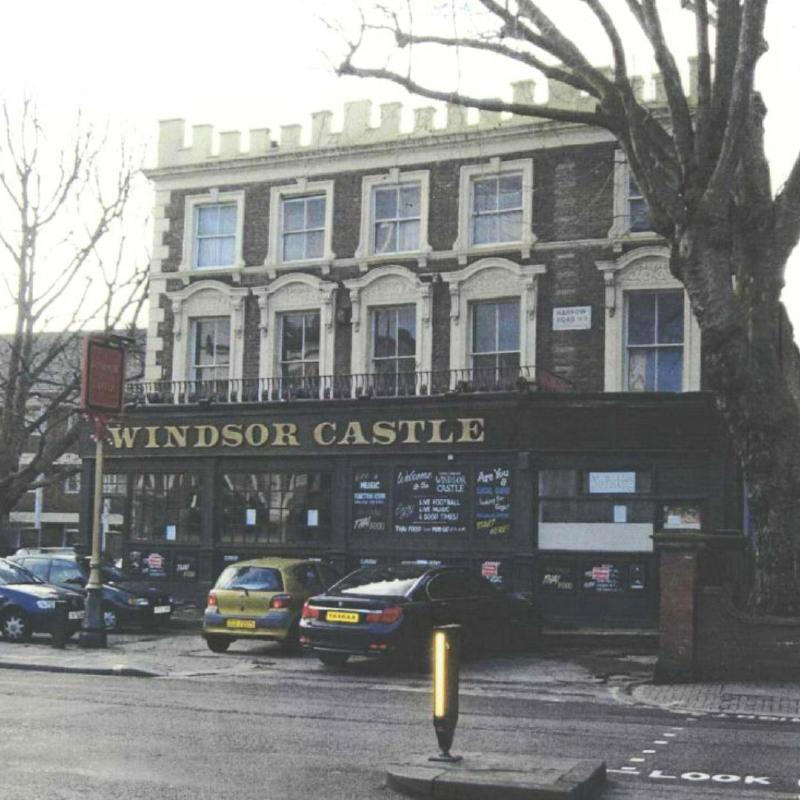
    <title type="html"><![CDATA[Windsor Castle Pub: Windsor Castle Pub]]></title>
    <summary type="html"><![CDATA[<p><strong><em>The pub that inspired one of the songs from the Clash in Maida Vale</em></strong></p><img src="https://www.maidavale.dh.msu.domains/files/fullsize/a210e00cc91bf3759eefa0092a6ef1bf.jpg" alt="[Untitled]" /><br/><p>Near the border with Kensington you will see an old building that once was a pub called Windsor Castle, this pub, or rather what was in the pub, was the inspiration for a famous Maida Vale resident’s song. That song is Protex Blue by the Clash, based off of a condom vending machine that had stuck out to the lead singer Joe Strummer. Joe Strummer was a resident, and active community member of Maida Vale for much of his life, while not born in the city he and his family had emigrated to London from Turkey at a young age. He had moved to Maida Vale after his days in college and became a street performer and would later help found several different bands and start his music career. Joe Strummer would continue to work in and support the music community and greater art community until his death in 2002.</p><p><em><strong><a href="https://www.maidavale.dh.msu.domains/items/show/37">For more (including 1 audio file) view the original article</a></strong></em></p>]]></summary>
    <published>2026-06-03T11:38:21+00:00</published>
    <updated>2026-07-07T20:37:12+00:00</updated>
    <link rel="alternate" type="text/html" href="https://www.maidavale.dh.msu.domains/items/show/37"/>
    <id>https://www.maidavale.dh.msu.domains/items/show/37</id>
    <author>
      <name>Gavin Hall</name>
    </author>
  </entry>
  <entry>
    <title type="html"><![CDATA[Warrington Crescent: Residential Area]]></title>
    <summary type="html"><![CDATA[<img src="https://www.maidavale.dh.msu.domains/files/fullsize/cc2c8cf2f5253663dd3769b95069d336.jpg" alt="[Untitled]" /><br/><p>As you stroll along the elegant Warrington Crescent, it is hard to believe that it was once the site of a tragedy. On March 7, 1918, a German bomber dropped a 1,000-kilogram bomb on Maida Vale, damaging several of the mid-nineteenth-century buildings that lined the street. A Maida Vale native named Lena Guilbert wrote the lyrics for a song called "Keep the Home-Fires Burning", which sought to provide comfort and hope to families separated from soldiers fighting on the front lines. You can <a href="https://www.youtube.com/watch?v=YvzAKT6C38Q&list=RDYvzAKT6C38Q&start_radio=1" title="Keep the Home-Fires Burning" target="_blank" rel="noreferrer noopener">listen to the song here</a>. Lena Guilbert later died due to the air raid in her home in Warrington Crescent. Her song remained an important piece of British patriotism. Below, you can view J Wright's etching of the Warrington Crescent after the 1918 bombing that killed lyricist Lena Guilbert and 11 others.</p><p>Before the attack, the buildings reflected the character of Victorian London, with red-brick façades and terraced layouts. While the bombing left a visible mark on the neighborhood, the destruction was not widespread enough to have a large-scale redevelopment. Instead, the street's recovery focused on preserving its historic identity while adapting it for a new era. </p><p>Today, Warrington Crescent showcases the refined architectural style that emerged from its reconstruction in the 1920s, and is a grade II-listed architectural area. The striking white stucco façades create a uniform and elegant appearance. Take note of the large exterior columns that frame many of the entrances, lending the buildings a grand and classical feel. The black-and-white diagonal checkerboard porch tiles provide another distinctive architectural detail you'll notice across London. This is because ceramic tiles became affordable to the middle class after they started being mass produced during the Industrial Revolution. Together, these features create a cohesive streetscape that blends historical preservation with the elegance for which Maida Vale is known.</p><p><em><strong><a href="https://www.maidavale.dh.msu.domains/items/show/30">For more (including 2 images) view the original article</a></strong></em></p>]]></summary>
    <published>2026-06-03T06:52:14+00:00</published>
    <updated>2026-06-03T14:26:01+00:00</updated>
    <link rel="alternate" type="text/html" href="https://www.maidavale.dh.msu.domains/items/show/30"/>
    <id>https://www.maidavale.dh.msu.domains/items/show/30</id>
    <author>
      <name>Julia Bolash&amp;#32;&amp;amp;&amp;#32;Madeline Peters</name>
    </author>
  </entry>
  <entry>
    <title type="html"><![CDATA[The Warrington Hotel: Refurbished Victorian Pub]]></title>
    <summary type="html"><![CDATA[<img src="https://www.maidavale.dh.msu.domains/files/fullsize/3656745afba68a7510ea8720cc5e9a0b.jpg" alt="[Untitled]" /><br/><p>Opened in 1857, The Warrington operated only as a traditional Victorian pub, attracting many visitors. Refurbishments were completed in the 1890s, during the peak of London’s pub rebuilding era, when Victorian and Edwardian styles became increasingly popular. Interestingly, the pub was rumored to have once operated as a high-class brothel, and its proximity to our previous stop, Randolph Crescent, is said to have inspired the slang term “randy” — someone showing excessive sexual desire.</p><p>As you pass by this stunning pub and hotel, you immediately notice the intricate glazed designs on the exterior, featuring geometric patterns and a depiction of a lion’s head. You will also notice the white stucco-covered brick and large columns that match many of the other buildings in the neighborhood. Look down on the porch and see the mosaic of the pub's name. These design features were no accident. In the 19th century, when the refurbishments took place, they were intentionally designed to attract wealthier clients.</p><p><em><strong><a href="https://www.maidavale.dh.msu.domains/items/show/15">For more (including 3 images) view the original article</a></strong></em></p>]]></summary>
    <published>2026-05-29T10:19:05+00:00</published>
    <updated>2026-06-18T12:34:34+00:00</updated>
    <link rel="alternate" type="text/html" href="https://www.maidavale.dh.msu.domains/items/show/15"/>
    <id>https://www.maidavale.dh.msu.domains/items/show/15</id>
    <author>
      <name>Julia Bolash&amp;#32;&amp;amp;&amp;#32;Madeline Peters</name>
    </author>
  </entry>
  <entry>
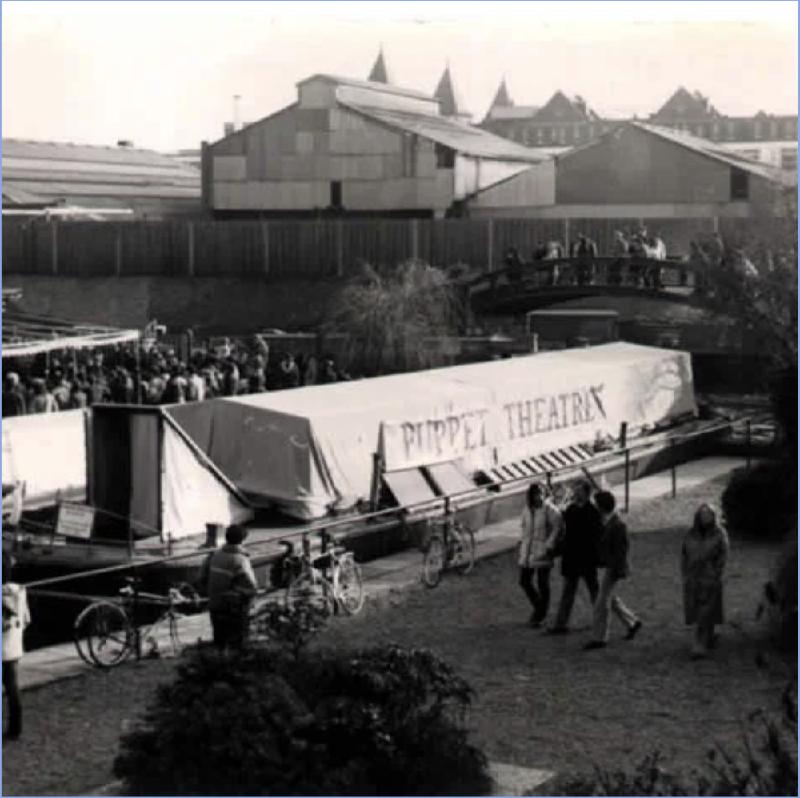
    <title type="html"><![CDATA[The Puppet Theatre Barge]]></title>
    <summary type="html"><![CDATA[<p><strong><em>A one -of-a-kind experience on the waters of Maida Vale, London.</em></strong></p><img src="https://www.maidavale.dh.msu.domains/files/fullsize/945ff152dc053e21fde68760e039346d.jpg" alt="Puppet Theatre Barge " /><br/><p><b>The Puppet Theatre Barge</b> began as a touring company called Movingstage Marionette Company. Founded in 1978 by Juliet Rogers and Gren Middleton, they worked together for many years at Little Angel Marionette Theatre - prior to the creation of The Puppet Theatre Barge - and came together to build their own marionette company. The Barge was originally based in Camden Lock (section of Regent's Canal in Camden Town). During their summers, they toured the Grand Union Canal. In 1986, it moved its winter base to Little Venice and each summer went up the River Thames. To this day, it operates as a moving venue; visiting locations in Little Venice (where it is typically stationed) and Richmond, London and Abingdon, Oxfordshire throughout the year. The Puppet Theatre Barge is a place where children and adults find whimsy and comfort in the storytelling skills of these puppet masters. Their entrancing performances breathe live into the canal and create a unique childhood experience for many.</p><p><em><strong><a href="https://www.maidavale.dh.msu.domains/items/show/14">For more (including 4 images) view the original article</a></strong></em></p>]]></summary>
    <published>2026-05-29T10:16:31+00:00</published>
    <updated>2026-06-03T14:21:00+00:00</updated>
    <link rel="alternate" type="text/html" href="https://www.maidavale.dh.msu.domains/items/show/14"/>
    <id>https://www.maidavale.dh.msu.domains/items/show/14</id>
    <author>
      <name>Teagan M</name>
    </author>
  </entry>
  <entry>
    <title type="html"><![CDATA[The Prince Alfred Pub]]></title>
    <summary type="html"><![CDATA[<img src="https://www.maidavale.dh.msu.domains/files/fullsize/9d7149b495b4aace7ce02c5dcce19821.jpg" alt="[Untitled]" /><br/><p>The Prince Alfred Pub was first built in 1863 and underwent a remodel in 1898. The pub features mosaic tiles, etched glasses, and “snob” screens, which are rotating glazed screens typical of the Victorian era. For over 100 years, this pub has been a place of connection and culture for the Maida Vale community. It has drawn in filmmakers and musicians, as the rear bar room served as a filming location for the world-famous musician, David Bowie, and his short film “Jazzin’ for Blue Jean” in 1984. The pub was also featured in “The End of the Affair”, a film based on the novel by Graham Greene, who frequently used Maida Vale as a setting in his work. Grab a pint, listen to David Bowie, and enjoy all the history The Prince Alfred’s Pub has to offer.</p><p><em><strong><a href="https://www.maidavale.dh.msu.domains/items/show/9">For more view the original article</a></strong></em></p>]]></summary>
    <published>2026-05-29T10:08:14+00:00</published>
    <updated>2026-07-07T20:44:38+00:00</updated>
    <link rel="alternate" type="text/html" href="https://www.maidavale.dh.msu.domains/items/show/9"/>
    <id>https://www.maidavale.dh.msu.domains/items/show/9</id>
    <author>
      <name>Cora Ackerson</name>
    </author>
  </entry>
  <entry>
    <title type="html"><![CDATA[The Lauderdale Road Synagogue]]></title>
    <summary type="html"><![CDATA[<img src="https://www.maidavale.dh.msu.domains/files/fullsize/9f9cb5a37d133efc1f96b9d04d758ccb.jpg" alt="An Image of The Lauderdale Road Synagogue" /><br/><p>During the late nineteenth and early twentieth centuries, Maida Vale experienced significant economic growth as wealthier residents moved into the area. Among them were Jewish families who had previously lived in London's East End. Many had improved their financial circumstances through occupations such as tailoring, manufacturing, retail, and trade. Their increasing prosperity enabled them to relocate to Maida Vale, where larger homes and a more suburban environment reflected their rising social status. The arrival of these families contributed to the area's economic development by increasing demand for local businesses, services, and housing. As the Jewish population grew, community institutions such as the Lauderdale Road synagogue that we see here were established, becoming important centers of social and economic life. The synagogue reflects how economic success influenced patterns of migration within London and demonstrates the connection between wealth, community formation, and urban development. Therefore, the synagogue provides insight into the economic transformation of Maida Vale during this period.</p><p><em><strong><a href="https://www.maidavale.dh.msu.domains/items/show/32">For more view the original article</a></strong></em></p>]]></summary>
    <published>2026-06-03T10:23:00+00:00</published>
    <updated>2026-06-03T13:19:11+00:00</updated>
    <link rel="alternate" type="text/html" href="https://www.maidavale.dh.msu.domains/items/show/32"/>
    <id>https://www.maidavale.dh.msu.domains/items/show/32</id>
    <author>
      <name>Olivia Selcanin</name>
    </author>
  </entry>
  <entry>
    <title type="html"><![CDATA[The Development of the Morshead Mansions]]></title>
    <summary type="html"><![CDATA[<img src="https://www.maidavale.dh.msu.domains/files/fullsize/5a1e7d38e06edf16ef5d6985bf2448ff.jpg" alt="A Map from the 1900s " /><br/><p>As we stand in front of Morshead Mansions, we can see one of the reasons why Maida Vale became such a desirable place to live. Attached below is a map of the area prior to the construction of Morshead Mansions. As shown on the map, this land was previously used as allotment gardens before being redeveloped into the mansion blocks we see today. These mansions were built in 1905. These mansion blocks are well known for their distinctive red brick design, which gives them a grand and wealthy appearance. One of the most noticeable features is the row of trees lining the street, creating a peaceful and attractive environment for residents. During their development, Morshead Mansions became highly sought after by wealthier families who wanted to live in a quieter and more prestigious part of London. The combination of beautiful architecture, natural surroundings, and spacious housing helped increase demand for properties in the area. This demand contributed to rising property values and reinforced Maida Vale's reputation as an affluent neighbourhood. Even today, Morshead Mansions remain a symbol of wealth and prestige, attracting residents who value the area's character and location. This stop demonstrates how housing developments can influence an area's economy and contribute to its long-term desirability.</p><p><em><strong><a href="https://www.maidavale.dh.msu.domains/items/show/31">For more (including 2 images) view the original article</a></strong></em></p>]]></summary>
    <published>2026-06-03T10:17:14+00:00</published>
    <updated>2026-06-03T13:26:10+00:00</updated>
    <link rel="alternate" type="text/html" href="https://www.maidavale.dh.msu.domains/items/show/31"/>
    <id>https://www.maidavale.dh.msu.domains/items/show/31</id>
    <author>
      <name>Olivia Selcanin</name>
    </author>
  </entry>
  <entry>
    <title type="html"><![CDATA[The Canals of Maida Vale: Regent&#039;s Canal and Grand Union Canal]]></title>
    <summary type="html"><![CDATA[<img src="https://www.maidavale.dh.msu.domains/files/fullsize/618cea3a8e446d6cd187e4bf1a9797a0.jpg" alt="[Untitled]" /><br/><p>The two canals in the Maida Vale area are the Regent’s canal and the Paddington arm of the Grand Union Canal. The Paddington branch of the Grand Union was added in 1801, and the Regent canal was built in 1812 and completed in 1820. As railways increased in usage, some traffic from the canals was lost, but by the end of the second world war, traffic increased again. In its first year, 120,000 tons of cargo were carried in the canal, and until the 1970s it continued to be used for commercial carrying. The canal was used for burges, some transporting timber, coal, or ice. With the development of roads and the end of the second world war (and in turn less pressure on railway supplies), the canals were used less and less. Even though the canal is no longer used for transportation of goods, it continues to draw people to the area, whether to live on the water, to take a walk, or to visit the Cheese Barge, the Puppet Theatre Barge or Words on the Water.</p><p><em><strong><a href="https://www.maidavale.dh.msu.domains/items/show/34">For more (including 2 images) view the original article</a></strong></em></p>]]></summary>
    <published>2026-06-03T11:04:13+00:00</published>
    <updated>2026-07-06T22:21:34+00:00</updated>
    <link rel="alternate" type="text/html" href="https://www.maidavale.dh.msu.domains/items/show/34"/>
    <id>https://www.maidavale.dh.msu.domains/items/show/34</id>
    <author>
      <name>Ella Cox</name>
    </author>
  </entry>
  <entry>
    <title type="html"><![CDATA[The Birthplace of Marc Bolan: The Old Home of Marc Bolan]]></title>
    <summary type="html"><![CDATA[<img src="https://www.maidavale.dh.msu.domains/files/fullsize/ef7bda77c04493d95102b6f711dd8382.jpg" alt="[Untitled]" /><br/><p>When you are walking around Maida Vale and Little Venice you might notice a little blue plaque outside a nice white house in Clarendon Gardens. This plaque belongs to the musician Marc Bolan who once lived at said house. Marc was one of the most influential members of the 70’s rock scene, as a friend, rival, and collaborator of David Bowie and the Lead of the rock band T-Rex he left a major mark on the scene as a whole. Marc has multiple plaques across London, showing how influential he was not only for his music, but also his impact on the city itself. He died very early in his life at the age of 29.</p><p><em><strong><a href="https://www.maidavale.dh.msu.domains/items/show/17">For more view the original article</a></strong></em></p>]]></summary>
    <published>2026-05-29T10:25:13+00:00</published>
    <updated>2026-07-07T20:38:10+00:00</updated>
    <link rel="alternate" type="text/html" href="https://www.maidavale.dh.msu.domains/items/show/17"/>
    <id>https://www.maidavale.dh.msu.domains/items/show/17</id>
    <author>
      <name>Gavin</name>
    </author>
  </entry>
  <entry>
    <title type="html"><![CDATA[The Birthplace of Alec Guinness]]></title>
    <summary type="html"><![CDATA[<img src="https://www.maidavale.dh.msu.domains/files/fullsize/cdfde6a2885f23399d3ec6b8c8b4f690.jpg" alt="[Untitled]" /><br/><p>“Who is more foolish? The fool or the fool that follows him?” -Obi Wan Kenobi, A New Hope. One of the most iconic films of all time, which changed the trajectory of the science fiction genre, and of fan culture, Star Wars hit theatres in the UK in December of 1977,  months after Americans across the pond, but with its insane popularity, you would never know. April 2nd, 1914, 155 Lauderdale Road, Alec Guinness is born. A legendary stage, film, and academy award winning actor, as well as a veteran of the Second World War, you could go up to most anyone and they would know the name Alec Guinness, or, at the very least, Obi Wan Kenobi. Despite the character being beloved by casual and super fans alike, Guinness is cited as viewing his role in Star Wars in a negative light, much like his co-star Harrison Ford (Han Solo). Guinness left a legacy of a beloved and acclaimed actor, and despite his disdain for his most famous role, it cannot be denied that he holds a special place in many hearts, and it all started here in Maida Vale. </p><p><em><strong><a href="https://www.maidavale.dh.msu.domains/items/show/2">For more (including 1 audio file) view the original article</a></strong></em></p>]]></summary>
    <published>2026-05-29T09:51:12+00:00</published>
    <updated>2026-07-07T20:29:13+00:00</updated>
    <link rel="alternate" type="text/html" href="https://www.maidavale.dh.msu.domains/items/show/2"/>
    <id>https://www.maidavale.dh.msu.domains/items/show/2</id>
    <author>
      <name>Kennedy Columbo</name>
    </author>
  </entry>
</feed>