<?xml version="1.0" encoding="UTF-8"?>
<feed xmlns="http://www.w3.org/2005/Atom">
  <title type="text">Tour of Maida Vale</title>
  <updated>2026-11-22T20:00:51+00:00</updated>
  <generator uri="http://framework.zend.com" version="1.12.20">Zend_Feed_Writer</generator>
  <link rel="alternate" type="text/html" href="https://www.maidavale.dh.msu.domains/"/>
  <link rel="self" type="application/atom+xml" href="https://www.maidavale.dh.msu.domains/items/browse?output=rss2"/>
  <id>https://www.maidavale.dh.msu.domains/</id>
  <author>
    <name>Tour of Maida Vale</name>
    <uri>https://www.maidavale.dh.msu.domains</uri>
  </author>
  <link rel="hub" href="http://pubsubhubbub.appspot.com/"/>
  <entry>
    <title type="html"><![CDATA[Elizabeth Emanuel: Bold London Fashion]]></title>
    <summary type="html"><![CDATA[<img src="https://www.maidavale.dh.msu.domains/files/fullsize/a584472567f8f7002eaf8bb467bebd7a.jpg" alt="[Untitled]" /><br/><p>Elizabeth Emanuel’s fashion career spans decades of London History, and her <a href="https://elizabethemanuel.com/atelier-contact/">studio</a> today is right here in Maida Vale. Born in 1953, Emanuel grew up enamored by the clothes of mid-century Britain, saying her love for fashion began from dressing up <a href="https://thelittlesindymuseum.com/welcome/">Sindy dolls</a> in her childhood and sought out a career that would indulge her love for illustration. She attended the Royal College of Art in London, and cited the city’s music scene as a major <a href="https://www.forbes.com/sites/katehardcastle/2021/05/19/i-lost-my-namenow-im-at-my-peak-the-thrills-and-frills-in-the-life-of-elizabeth-emanuel/">inspiration</a>, naming art pop and glam rock artists such as David Bowie and Kate Bush as major influences in her development as an artist. </p><p>Her work, beginning with her career in the 1980s, is reminiscent of the decade even years later. Her works are characteristically large, voluminous, bold styles including her signature lace and frills. 
Emanuel is most known for designing Princess Diana’s wedding dress among other garments for “The People’s Princess”. Diana’s clothes were so inspirational to the British public, that after Emanuel became associated with the Princess of Wales, orders at her studio skyrocketed. The two worked closely together, rarely with royal intermediaries, leading to multiple incidental <a href="https://edition.cnn.com/audio/podcasts/when-diana-met/episodes/e24fbee6-b738-4ba2-b8c1-ae04012f40ee">breaches</a> of royal protocol. Emanuel’s dedication to authenticity and individual style took precedence in her work over external authorities.
Her studio has additionally designed for actresses, musicians, and other royalty, such as Margaret Campbell the Duchess of Argyll, Jane Seymour, Enya, Madonna, Bianca Jagger, and Elizabeth Taylor.</p><p>A more recent work of hers, the <a href="https://elizabethemanuel.com/the-paris-1902-collection/">Paris 1902 Collection</a>, took inspiration from Virginia Woolf’s novel Orlando, featuring a combination palette of vintage neutrals and bright metallics, with striking lace and embroidery and sharp silhouettes. </p><p><em><strong><a href="https://www.maidavale.dh.msu.domains/items/show/41">For more view the original article</a></strong></em></p>]]></summary>
    <published>2026-06-03T13:15:34+00:00</published>
    <updated>2026-06-03T14:35:33+00:00</updated>
    <link rel="alternate" type="text/html" href="https://www.maidavale.dh.msu.domains/items/show/41"/>
    <id>https://www.maidavale.dh.msu.domains/items/show/41</id>
    <author>
      <name>Erin Broecker</name>
    </author>
  </entry>
  <entry>
    <title type="html"><![CDATA[Land Ownership changes: Development of Maida Vale ]]></title>
    <summary type="html"><![CDATA[<img src="https://www.maidavale.dh.msu.domains/files/fullsize/dff0d6a529755e0b222a05d919a3b9d9.jpg" alt="[Untitled]" /><br/><p>Since its development, Maida Vale has been an affluent area with wealthy developers and residents. In his will, Sir John Frederick left land to three beneficiaries. The Charles Booth map shows St. Peters (the previous name of this area) as a largely wealthy space. This area was relatively rural until the 1860s with the first leases made by Sir John Neeld. This area expanded alongside the growth of the canal, with leases divided between Commissioners of the Church and the trustees of the lessees. In order to live in this area, residents needed access to money, and through the First World War most mansions were not sub-divided or changed into flats. Through the 20th century, the Church Commissioners continued to have land ownership, in some instances selling agricultural land to purchase land in the city in hopes of redevelopment and financial benefit for the church, with a focus on continued economic increase.</p><p><em><strong><a href="https://www.maidavale.dh.msu.domains/items/show/40">For more (including 2 images) view the original article</a></strong></em></p>]]></summary>
    <published>2026-06-03T13:11:38+00:00</published>
    <updated>2026-07-06T22:13:47+00:00</updated>
    <link rel="alternate" type="text/html" href="https://www.maidavale.dh.msu.domains/items/show/40"/>
    <id>https://www.maidavale.dh.msu.domains/items/show/40</id>
    <author>
      <name>Ella Cox</name>
    </author>
  </entry>
  <entry>
    <title type="html"><![CDATA[Edward Ardizzone: A Children&#039;s Illustrator at War]]></title>
    <summary type="html"><![CDATA[<img src="https://www.maidavale.dh.msu.domains/files/fullsize/b3d3750305870730bc2e73f739e17c72.jpg" alt="[Untitled]" /><br/><p>Edward Ardizzone is said to have been the most travelled and most beloved government-commissioned war artist of all time. He lived in this house from 1920 - 1972 and began as a professional <a href="https://www.lib.usm.edu/legacy/degrum/public_html/html/research/findaids/ardizzon.htm">artist</a> through advertising and freelance book illustration. He later wrote, illustrated, and published his own children’s series. During World War II, he served as a <a href="https://www.iwm.org.uk/history/second-world-war/home-front/how-war-artist-edward-ardizzone-showed-the-human-side-of-war">war artist</a>, and published a book on his experience travelling to France at the beginning of the war, back to England to document the Blitz, then to Egypt, Italy, and Germany amongst other nations. </p><p>His background in portraying real life in a palatable way to children gave his war depictions a charming appeal. The positive representation of Britain’s contributions to the war were then used as propaganda on the home front. His art still bore, in some cases, depictions of war’s devastation, with a gentle touch. The War Artists Advisory Committee (WAAC) received over 400 works from Ardizzone. More of Ardizzone’s works can be accessed via the <a href="https://www.edward-ardizzone-archive.org/">Edward Ardizzone Archive</a>.</p><p><em><strong><a href="https://www.maidavale.dh.msu.domains/items/show/38">For more (including 2 images) view the original article</a></strong></em></p>]]></summary>
    <published>2026-06-03T11:51:26+00:00</published>
    <updated>2026-06-03T14:35:18+00:00</updated>
    <link rel="alternate" type="text/html" href="https://www.maidavale.dh.msu.domains/items/show/38"/>
    <id>https://www.maidavale.dh.msu.domains/items/show/38</id>
    <author>
      <name>Erin Broecker</name>
    </author>
  </entry>
  <entry>
    <title type="html"><![CDATA[Windsor Castle Pub: Windsor Castle Pub]]></title>
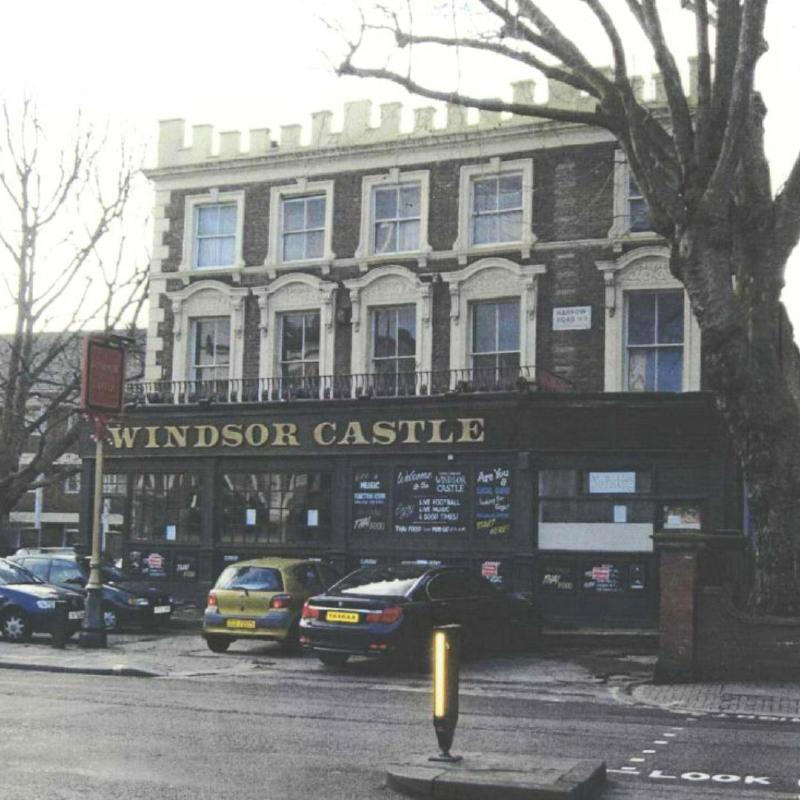
    <summary type="html"><![CDATA[<p><strong><em>The pub that inspired one of the songs from the Clash in Maida Vale</em></strong></p><img src="https://www.maidavale.dh.msu.domains/files/fullsize/a210e00cc91bf3759eefa0092a6ef1bf.jpg" alt="[Untitled]" /><br/><p>Near the border with Kensington you will see an old building that once was a pub called Windsor Castle, this pub, or rather what was in the pub, was the inspiration for a famous Maida Vale resident’s song. That song is Protex Blue by the Clash, based off of a condom vending machine that had stuck out to the lead singer Joe Strummer. Joe Strummer was a resident, and active community member of Maida Vale for much of his life, while not born in the city he and his family had emigrated to London from Turkey at a young age. He had moved to Maida Vale after his days in college and became a street performer and would later help found several different bands and start his music career. Joe Strummer would continue to work in and support the music community and greater art community until his death in 2002.</p><p><em><strong><a href="https://www.maidavale.dh.msu.domains/items/show/37">For more (including 1 audio file) view the original article</a></strong></em></p>]]></summary>
    <published>2026-06-03T11:38:21+00:00</published>
    <updated>2026-07-07T20:37:12+00:00</updated>
    <link rel="alternate" type="text/html" href="https://www.maidavale.dh.msu.domains/items/show/37"/>
    <id>https://www.maidavale.dh.msu.domains/items/show/37</id>
    <author>
      <name>Gavin Hall</name>
    </author>
  </entry>
  <entry>
    <title type="html"><![CDATA[Hardy Amies: Mid-Century Royal Couterier]]></title>
    <summary type="html"><![CDATA[<img src="https://www.maidavale.dh.msu.domains/files/fullsize/0c4f5bfff1fddf8acf90df0f61f2b5dd.jpg" alt="[Untitled]" /><br/><p>Hardy Amies was a fashion designer who most notably designed day clothes for Queen Elizabeth II, and additionally designed for his own couture fashion brand, owning numerous franchise locations where his designs continued to be sold on Saville Row today. Amies was born at this house in 1909. When Amies began designing commercial clothing in the 1960s, the popular modern style was “Regency revival”. Regency fashion included high empire waistlines, wide necklines, and puffy sleeves, aligned with the period of uncertainty during the reign of the Prince Regent George IV, which bore resemblence to the immense quantity of social changes in the 1960s. Amies’ lifelong career was influenced by his adoration for classic styles with gentle influences from mod-style, distancing his work from the likes of <a href="https://www.historytoday.com/archive/feature/britains-first-youthquake" target="_blank" rel="noreferrer noopener">youth culture</a> innovators like <a href="https://www.londonmuseum.org.uk/collections/london-stories/how-mary-quant-revolutionised-1960s-fashion/">Mary Quant</a> who sought to establish definitive and radical style differences between older adults and their young or teenaged children. </p><p>This creative restraint exercised with an educated historical prowess made him a perfect fit to dress Queen Elizabeth II, alongside fellow couturier Norman Hartnell, from her ascent to the crown in 1955 until 1990, when Hardy was then knighted for his service to the crown and contributions to his industry. Throughout his career, Amies also designed for Lady Delamere and Princess Diana. </p><p>Additionally, Amies did more than design for the catwalk and royalty. He was specifically invited by Stanley Kubrick to design the costumes for the now classic 1968 film “2001: Space Odyssey”. Amies’ deliberate and restrictive eye has been <a href="https://www.theguardian.com/fashion/fashion-blog/2014/nov/28/2001-space-odyssey-the-fashion-power-of-designer-hardy-amies" target="_blank" rel="noreferrer noopener">lauded </a>as a key aspect to the film’s timelessness, as the costumes designed were explicitly avoidant of looking stereotypically “futuristic”. Amies cultivated a <a href="https://www.londonmuseum.org.uk/collections/london-stories/hardy-amies-londons-great-tailor-couturier/" target="_blank" rel="noreferrer noopener">taste</a> appealing to the upper classes of the mid-to-late 20th century by combining the essence of modernity with conservative and refined garments.</p><p><em><strong><a href="https://www.maidavale.dh.msu.domains/items/show/36">For more (including 2 images) view the original article</a></strong></em></p>]]></summary>
    <published>2026-06-03T11:27:23+00:00</published>
    <updated>2026-06-03T13:41:02+00:00</updated>
    <link rel="alternate" type="text/html" href="https://www.maidavale.dh.msu.domains/items/show/36"/>
    <id>https://www.maidavale.dh.msu.domains/items/show/36</id>
    <author>
      <name>Erin Broecker</name>
    </author>
  </entry>
  <entry>
    <title type="html"><![CDATA[Elgin Avenue Squatters&#039; Protest]]></title>
    <summary type="html"><![CDATA[<img src="https://www.maidavale.dh.msu.domains/files/fullsize/a133bc7f2d1a46621d427f7f2977200a.jpg" alt="[Untitled]" /><br/><p><span style="font-weight: 400;">The Walterton and Elgin Community homes, developed in response to poor living conditions in the 1950s  and 70s, did a great deal of work for the residents of government-regulated housing. The London City Council bought the Walterton Estate from Church Commissioners, which was in poor condition due the the ownership of these towers by slumlords such as Peter Rachman. In the 1980s, ownership changed from the Greater London Council to Westminster City Council. In 1985, the estates were sold to developers without informing the residents, who in response formed the Walterton and Elgin Action Group, and organized protests and petitions to ensure continued access to housing. One way of resisting this change was through squatting, which occurred over multiple years. In 1992, the residents of Walterton and Elgin took over ownership, and the Westminster Council paid a ‘dowry’, over 22 million pounds to the WECH organization. Investigation commissioned by the Westminster Council found asbestos in the Hermes and Chantry Points towers, and these were demolished and replaced with safer housing. The squatters protest is an example of movement by a lower-income community to keep their space and homes instead of being pushed out. In the story of the Maida Vale area, this broadens our understanding of wealth and access in this community.</p></p><p><iframe width="560" height="315" src="https://www.youtube.com/embed/s-zE5Rd36lw?si=P1Evvp1wsgNjntAf" title="YouTube video player" frameborder="0" allow="accelerometer; autoplay; clipboard-write; encrypted-media; gyroscope; picture-in-picture; web-share" referrerpolicy="strict-origin-when-cross-origin" allowfullscreen="allowfullscreen"></iframe></p><p><em><strong><a href="https://www.maidavale.dh.msu.domains/items/show/35">For more view the original article</a></strong></em></p>]]></summary>
    <published>2026-06-03T11:22:18+00:00</published>
    <updated>2026-07-06T22:15:19+00:00</updated>
    <link rel="alternate" type="text/html" href="https://www.maidavale.dh.msu.domains/items/show/35"/>
    <id>https://www.maidavale.dh.msu.domains/items/show/35</id>
    <author>
      <name>Ella Cox</name>
    </author>
  </entry>
  <entry>
    <title type="html"><![CDATA[The Canals of Maida Vale: Regent&#039;s Canal and Grand Union Canal]]></title>
    <summary type="html"><![CDATA[<img src="https://www.maidavale.dh.msu.domains/files/fullsize/618cea3a8e446d6cd187e4bf1a9797a0.jpg" alt="[Untitled]" /><br/><p>The two canals in the Maida Vale area are the Regent’s canal and the Paddington arm of the Grand Union Canal. The Paddington branch of the Grand Union was added in 1801, and the Regent canal was built in 1812 and completed in 1820. As railways increased in usage, some traffic from the canals was lost, but by the end of the second world war, traffic increased again. In its first year, 120,000 tons of cargo were carried in the canal, and until the 1970s it continued to be used for commercial carrying. The canal was used for burges, some transporting timber, coal, or ice. With the development of roads and the end of the second world war (and in turn less pressure on railway supplies), the canals were used less and less. Even though the canal is no longer used for transportation of goods, it continues to draw people to the area, whether to live on the water, to take a walk, or to visit the Cheese Barge, the Puppet Theatre Barge or Words on the Water.</p><p><em><strong><a href="https://www.maidavale.dh.msu.domains/items/show/34">For more (including 2 images) view the original article</a></strong></em></p>]]></summary>
    <published>2026-06-03T11:04:13+00:00</published>
    <updated>2026-07-06T22:21:34+00:00</updated>
    <link rel="alternate" type="text/html" href="https://www.maidavale.dh.msu.domains/items/show/34"/>
    <id>https://www.maidavale.dh.msu.domains/items/show/34</id>
    <author>
      <name>Ella Cox</name>
    </author>
  </entry>
  <entry>
    <title type="html"><![CDATA[Maida Vale Today]]></title>
    <summary type="html"><![CDATA[<img src="https://www.maidavale.dh.msu.domains/files/fullsize/4866222b9b4e4f300a990579a88a4700.jpg" alt="Image of Maida Vale Today" /><br/><p>As we can see while walking through this peaceful neighbourhood, Maida Vale remains a highly sought-after residential area today. Known for its beautiful gardens, elegant Victorian and Edwardian houses, close proximity to the Grand Union Canal, and quiet atmosphere, it continues to attract affluent residents. The audio provided highlights one of the area's most valuable features: its peacefulness. Unlike many parts of London, Maida Vale offers a calm environment with relatively little noise, making it an attractive place to live. This shows how factors such as location, environmental quality, and housing can contribute to economic value. The high demand for property in the area has resulted in some of the highest house prices in London, reinforcing its reputation as a prestigious neighbourhood. Throughout this tour, we have explored how wealth and economic opportunities have influenced the development of Maida Vale. Today, the area's strong property market and desirable living conditions continue to shape its economy, demonstrating how economic success can leave a lasting impact on an urban area. </p><p><em><strong><a href="https://www.maidavale.dh.msu.domains/items/show/33">For more (including 2 images&#32;&amp;&#32;1 audio file) view the original article</a></strong></em></p>]]></summary>
    <published>2026-06-03T10:30:20+00:00</published>
    <updated>2026-06-03T13:18:13+00:00</updated>
    <link rel="alternate" type="text/html" href="https://www.maidavale.dh.msu.domains/items/show/33"/>
    <id>https://www.maidavale.dh.msu.domains/items/show/33</id>
    <author>
      <name>Olivia Selcanin</name>
    </author>
  </entry>
  <entry>
    <title type="html"><![CDATA[The Lauderdale Road Synagogue]]></title>
    <summary type="html"><![CDATA[<img src="https://www.maidavale.dh.msu.domains/files/fullsize/9f9cb5a37d133efc1f96b9d04d758ccb.jpg" alt="An Image of The Lauderdale Road Synagogue" /><br/><p>During the late nineteenth and early twentieth centuries, Maida Vale experienced significant economic growth as wealthier residents moved into the area. Among them were Jewish families who had previously lived in London's East End. Many had improved their financial circumstances through occupations such as tailoring, manufacturing, retail, and trade. Their increasing prosperity enabled them to relocate to Maida Vale, where larger homes and a more suburban environment reflected their rising social status. The arrival of these families contributed to the area's economic development by increasing demand for local businesses, services, and housing. As the Jewish population grew, community institutions such as the Lauderdale Road synagogue that we see here were established, becoming important centers of social and economic life. The synagogue reflects how economic success influenced patterns of migration within London and demonstrates the connection between wealth, community formation, and urban development. Therefore, the synagogue provides insight into the economic transformation of Maida Vale during this period.</p><p><em><strong><a href="https://www.maidavale.dh.msu.domains/items/show/32">For more view the original article</a></strong></em></p>]]></summary>
    <published>2026-06-03T10:23:00+00:00</published>
    <updated>2026-06-03T13:19:11+00:00</updated>
    <link rel="alternate" type="text/html" href="https://www.maidavale.dh.msu.domains/items/show/32"/>
    <id>https://www.maidavale.dh.msu.domains/items/show/32</id>
    <author>
      <name>Olivia Selcanin</name>
    </author>
  </entry>
  <entry>
    <title type="html"><![CDATA[The Development of the Morshead Mansions]]></title>
    <summary type="html"><![CDATA[<img src="https://www.maidavale.dh.msu.domains/files/fullsize/5a1e7d38e06edf16ef5d6985bf2448ff.jpg" alt="A Map from the 1900s " /><br/><p>As we stand in front of Morshead Mansions, we can see one of the reasons why Maida Vale became such a desirable place to live. Attached below is a map of the area prior to the construction of Morshead Mansions. As shown on the map, this land was previously used as allotment gardens before being redeveloped into the mansion blocks we see today. These mansions were built in 1905. These mansion blocks are well known for their distinctive red brick design, which gives them a grand and wealthy appearance. One of the most noticeable features is the row of trees lining the street, creating a peaceful and attractive environment for residents. During their development, Morshead Mansions became highly sought after by wealthier families who wanted to live in a quieter and more prestigious part of London. The combination of beautiful architecture, natural surroundings, and spacious housing helped increase demand for properties in the area. This demand contributed to rising property values and reinforced Maida Vale's reputation as an affluent neighbourhood. Even today, Morshead Mansions remain a symbol of wealth and prestige, attracting residents who value the area's character and location. This stop demonstrates how housing developments can influence an area's economy and contribute to its long-term desirability.</p><p><em><strong><a href="https://www.maidavale.dh.msu.domains/items/show/31">For more (including 2 images) view the original article</a></strong></em></p>]]></summary>
    <published>2026-06-03T10:17:14+00:00</published>
    <updated>2026-06-03T13:26:10+00:00</updated>
    <link rel="alternate" type="text/html" href="https://www.maidavale.dh.msu.domains/items/show/31"/>
    <id>https://www.maidavale.dh.msu.domains/items/show/31</id>
    <author>
      <name>Olivia Selcanin</name>
    </author>
  </entry>
</feed>